

Skip to Content

Sustainability

Pigment Library

Explore Sustainable Color at MassArt

The Resilient Pigment Library is a growing collection of inks, pigments, paints, dyes, and color materials that encourages artists and designers to think differently about where color comes from—and the impact it has on people, communities, and ecosystems.

Founded in 2020 by Sustainability Fellow and Studio Foundation Professor Jane D. Marsching, the library brings together pigments and color materials collected from around the world. The collection includes naturally derived pigments created from berries, trees, plants, soil, rocks, minerals, and other organic materials, alongside contributions and knowledge from indigenous artists, soil scientists, geologists, farmers, and creatives working with sustainable processes.

A Living Resource for Sustainability at MassArt

The Resilient Pigment Library supports coursework, workshops, exhibitions, and interdisciplinary collaboration across MassArt’s Sustainability Initiative. The collection continues to grow as students and faculty explore sustainable material practices through hands-on experimentation and research.

The library was also inspired by a collection of historical pigments from the 1800s manufactured and distributed by Professor Marsching’s great grandfather’s company, J. Marsching & Co.

Future plans for the project include an online compendium of pigment histories, sustainable sourcing information, curriculum resources, and documentation of student and faculty research.

Walnut Year (2021–22)

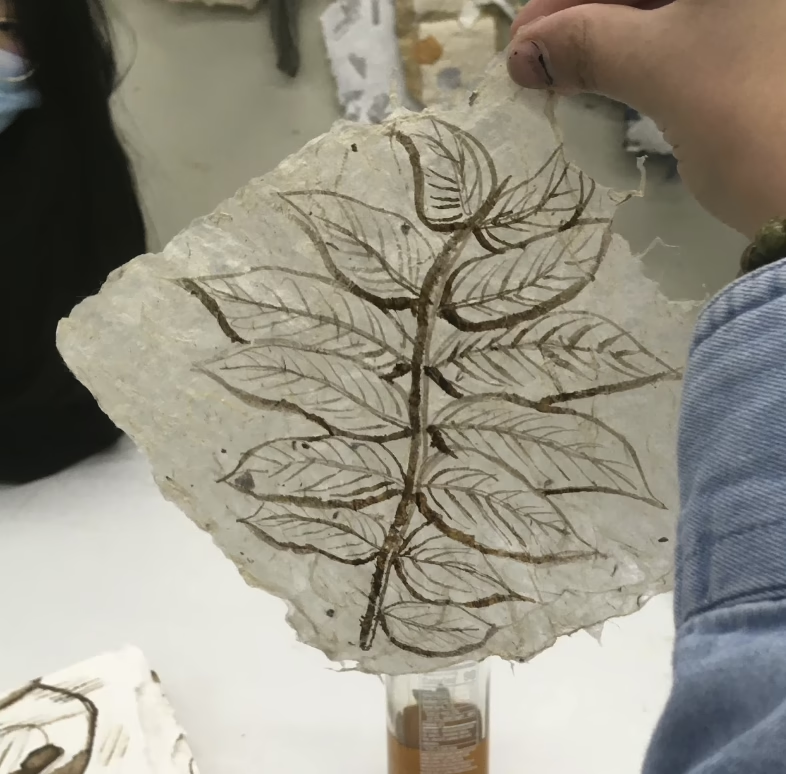
To launch the Resilient Pigment Library in 2021, the Sustainability Initiative designated walnut as the “color of the year” for the 2021–22 academic year. 

Black walnut hulls have long been used as natural pigments in dyes, inks, baskets, and fine art practices throughout North America. Rich in juglone and tannins, walnut pigment oxidizes into a warm, lightfast brown and can be sustainably foraged and processed with minimal equipment. 

During the academic year:

  • Professors across 10 courses integrated walnut pigment into studio projects and coursework
  • More than 150 students worked with hand-made walnut inks and pigments
  • Workshops introduced students to reciprocal foraging and natural pigment making
  • A culminating exhibition showcased student work created with walnut pigment in the Sustainability Studio

The initiative connected material experimentation with sustainability, ecology, and interdisciplinary creative practice. 

Rethinking the Materials We Use

Artists and designers work with pigments everyday—oil paints, watercolor, acrylics, inks, markers, dyes, stains, printing pigments, and more. Yet we rarely stop to consider where these materials come from or how they affect human health, labor systems, local ecologies, and planetary sustainability.

This Resilient Pigment Library poses the question:

  • What would it look like to create work using pigments sourced from within our own bioregion?
  • How can artists participate in safer, healthier, and more just material systems?
  • What role can creative practice play in supporting restorative local economies and climate resilience?

Through research, testing, and collaborative learning, the pigment library allows artists and designers to explore how they can build more responsible relationships with the materials they use every day.

Explore MassArt’s Material’s Map (opens in new tab)

MassArt logo
621 Huntington Ave,
Boston, MA 02115

(617) 879-7000