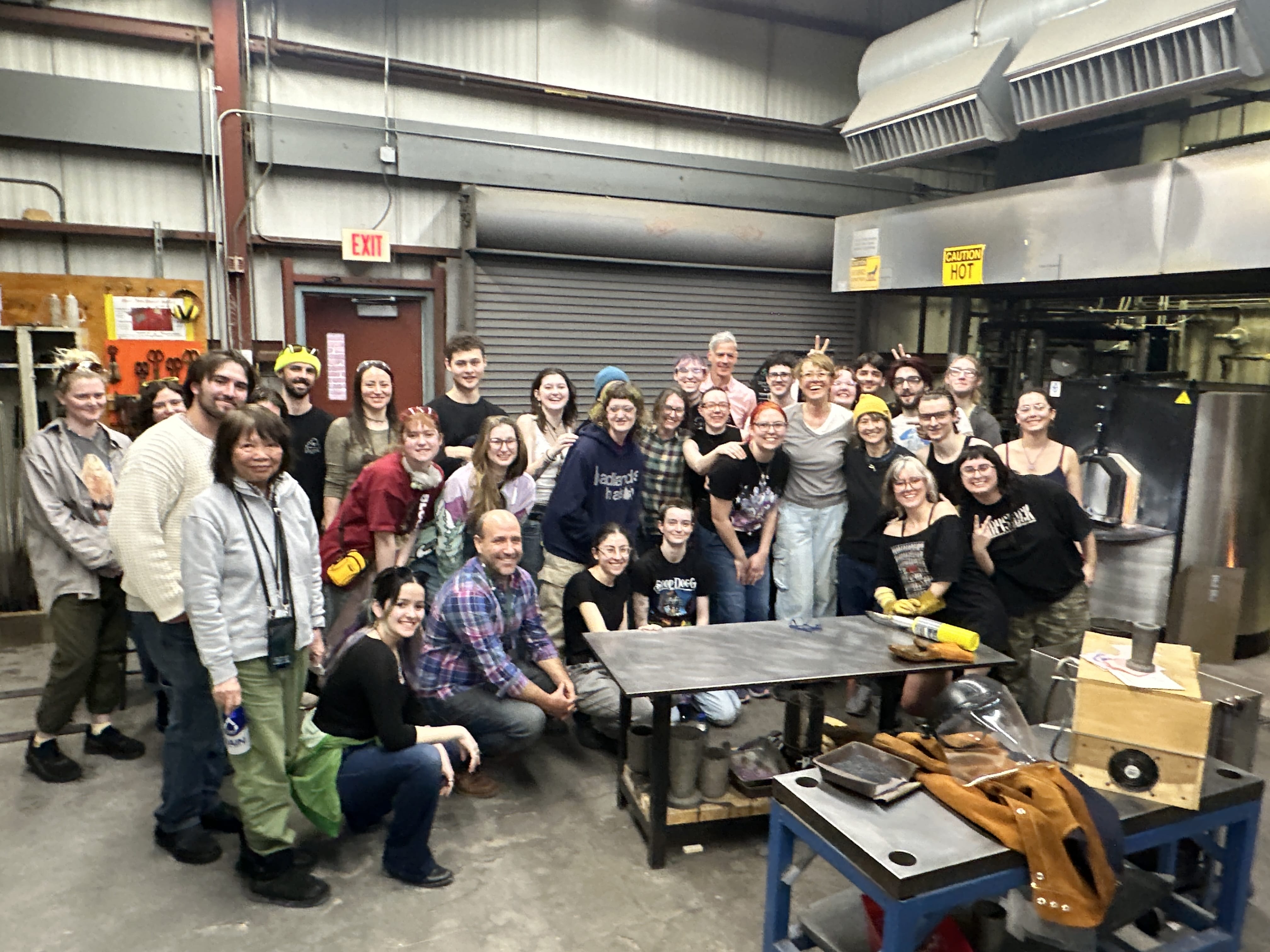
Together, the group created a large-scale mushroom sculpture topped with a cluster of tiny mushrooms. The process unfolded on two tracks. While one team focused on building the substantial base and cap, others shaped and rolled miniature mushrooms in fragments of colored glass and gold leaf. These small forms were kept hot and refined before being incorporated into the larger piece. Swirling patterns emerged as layers of color were gathered and blown out, demonstrating how preparation and sequencing directly affect the final result.
“Pre-planning is key,” Nancy emphasized throughout the demonstration. Because glass remains workable only for a limited time, every step must be anticipated. Tools are positioned in advance, assistants know their cues, and each reheating is deliberate. The choreography is demanding, but it allows for precision and innovation within a narrow window of possibility.
For students, the workshop offered a clear view of professional practice—both the discipline behind the artistry and the importance of trust among collaborators. For Nancy, returning to MassArt was a meaningful full-circle moment, revisiting the same environment that first sparked her passion.
The day reinforced what makes glassblowing distinctive: it is a material-driven art form that requires collective effort, careful planning, and shared momentum. In the glow of the furnaces, students witnessed not only the transformation of molten glass into sculptural form, but the power of working together to bring a complex idea to life.