Skip to Content

Industrial Design Faculty & Department Administrators

From Boston to Langa, South Africa: MassArt Students Team Up with MIT to Rethink Emergency Access

MassArt students develop community-designed emergency transport in Langa, South Africa—partnering with locals to improve healthcare access.

Share related links

Editor’s Note: Maddie and Michela returned to Langa in June 2025. Updates have been made to this story to reflect their most recent trip.

In Langa, South Africa, stories of hardship in accessing medical care are common—and often heartbreaking. Ambulances are scarce, roads are unpaved, and care often arrives too late, or not at all.

As Industrial Design students at MassArt, we cross registered at MIT for D-Lab: Design with Ankita Singh and Eliza Squibb in February 2024, where we launched REACH (Reliable Emergency Access for Community Health)—a partnership with Lebogang Molete of the PHELA Foundation aimed at improving emergency medical transportation in underserved communities.

Alongside an MIT student team, we began designing an all-terrain stretcher to safely transport patients to clinics. We continued REACH as our senior thesis, diving into research on South Africa’s townships, healthcare system, and existing products. 

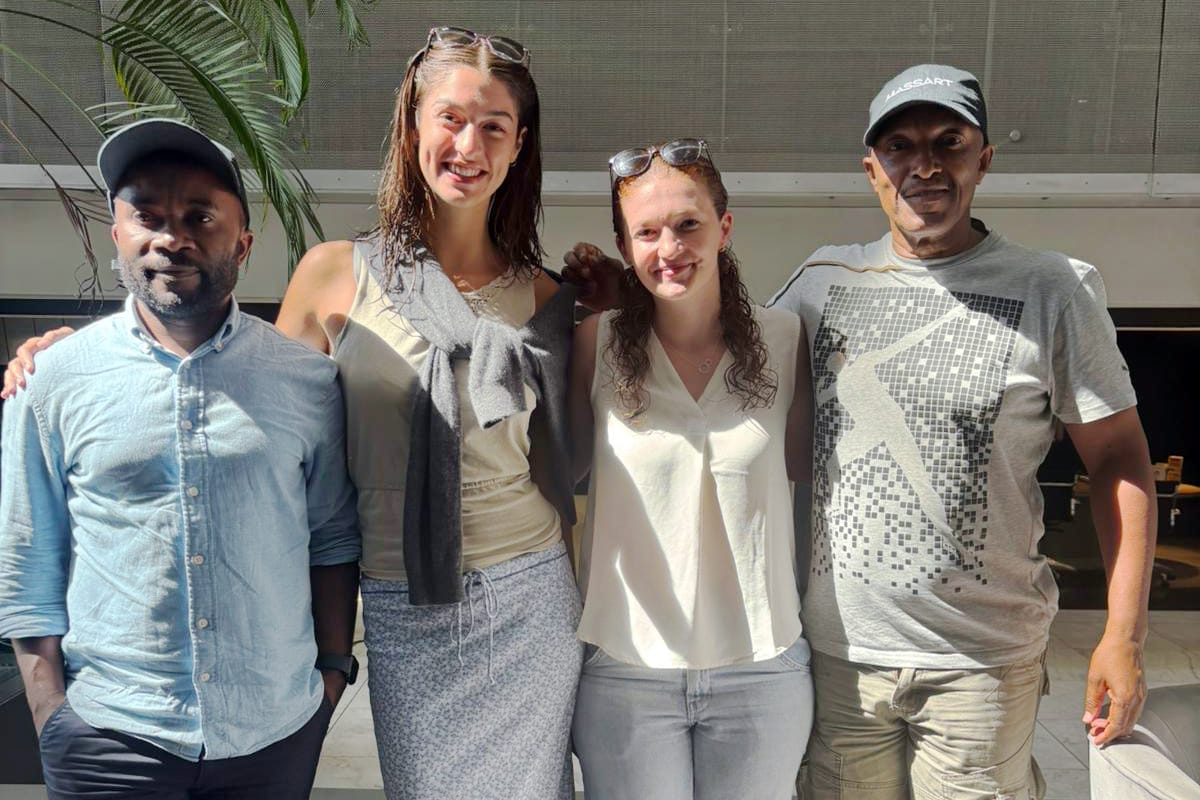
With support from the MassArt Foundation, we traveled to Cape Town in January 2025 to meet with community members to understand these challenges firsthand. More than an emergency transportation solution, REACH is a community-driven initiative to help build sustainable healthcare infrastructure in South Africa’s townships.

Community-Centered Solutions: The Bike Hub and Langa Township

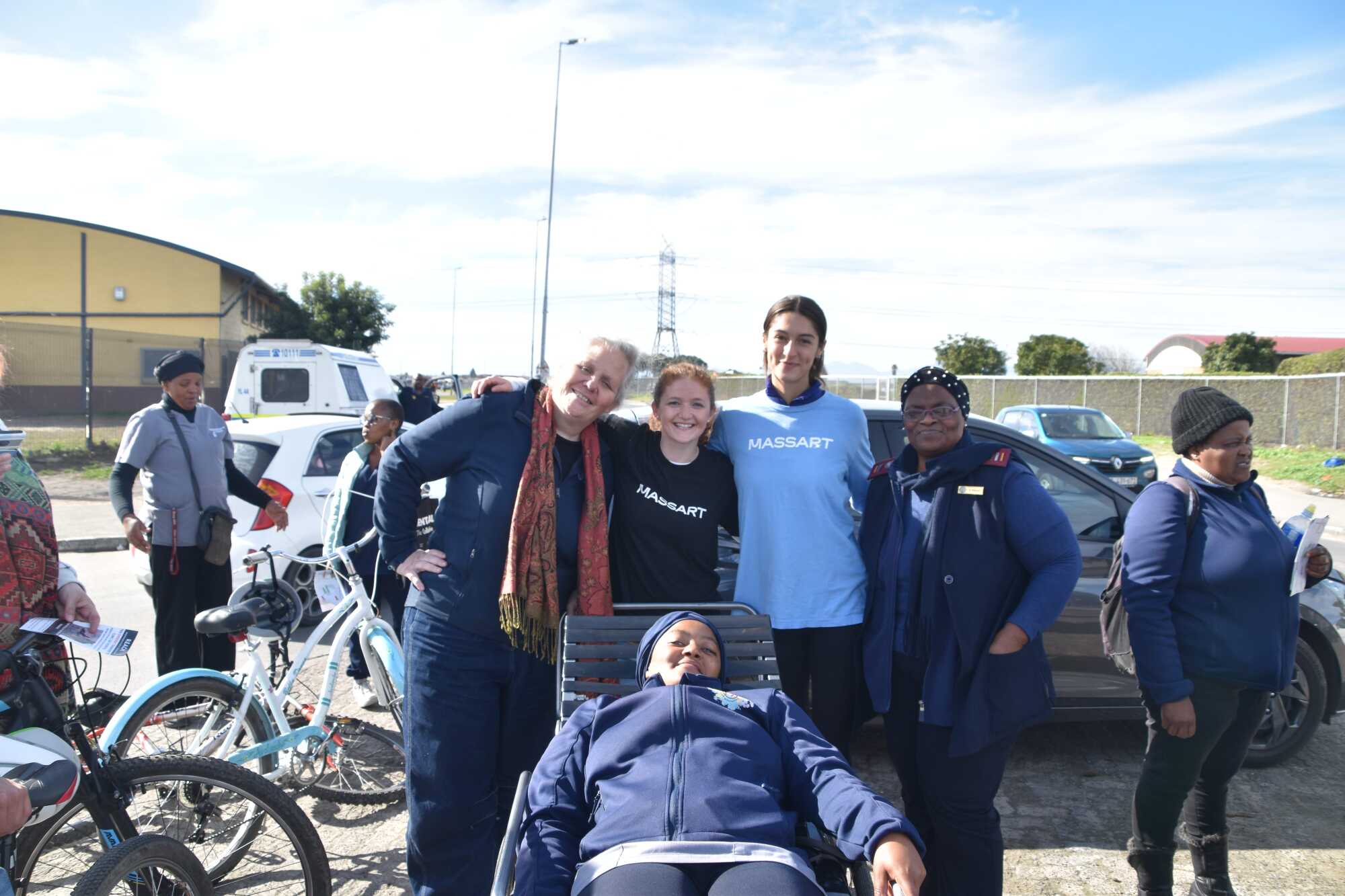
Our first stop was a meeting with Mzikhona Mgedle, the founder of Langa Bicycle Hub. The team took us through Langa by bike, explaining the different areas and terrain of the township and the existing infrastructure. We saw homes constructed with rusting tin sheets, old planks of wood, and other found materials, with no access to clean water. Biking from these areas to the local medical facilities gave us a real understanding of the area’s barriers to accessing care and how the system wasn’t set up to serve those living in lower infrastructure areas. With narrow dirt roads riddled with potholes and broken down cars, it was apparent that ambulances wouldn’t be able to access those deeper into these settlements.

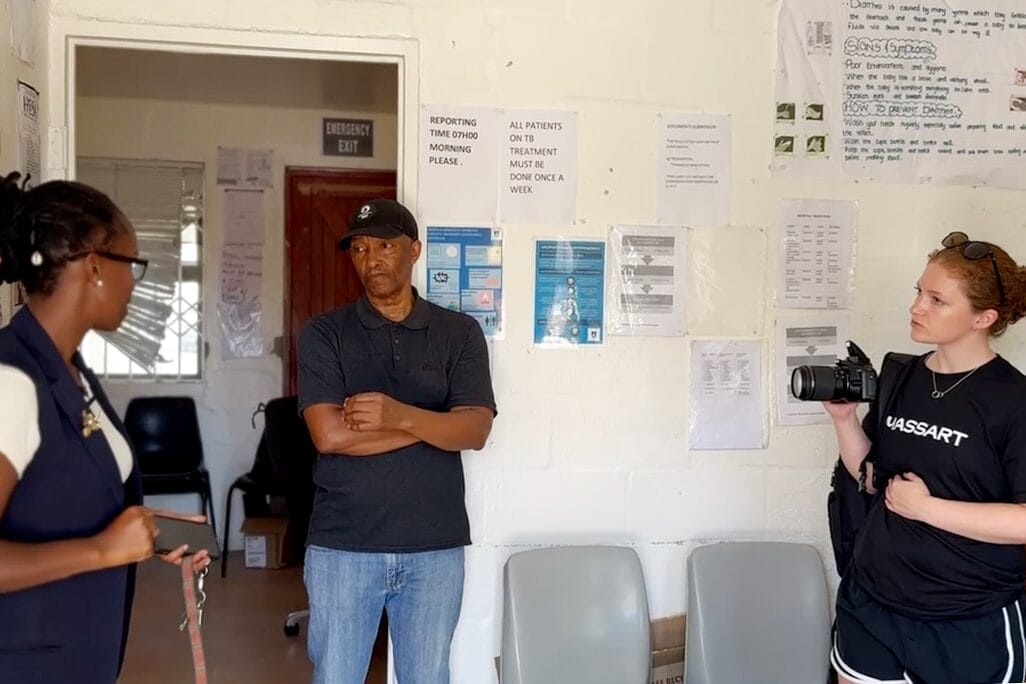
We also met with Yvette Andrews, the Clinical Program Coordinator for Langa, who dedicated time to helping us understand the unfiltered realities of healthcare in many of South Africa’s townships. She introduced us to the coordinator of Langa’s 42 community healthcare workers, who act as the first level of care. They gave us a tour of their small wellness center,  and the insight we gained during this visit went beyond what our research from the previous semester had taught us.

The Heart of Innovation: Shonaquip Warehouse and Test Facility

During our stay, we also met up with a fantastic organization, Shonaquip SSE, a local enterprise that builds assistive mobility devices and enables the inclusion of children with disabilities and their families across Southern Africa. Shonaquip’s founder, Shona McDonald, invited us to tour the manufacturing facility, meet the design team, and shadow a technician during their clinic day. 

At the warehouse, we were able to see first-hand the iterative designing and testing processes required for customized assistive devices. Spending time with Shonaquip’s head of design, we learned about the development of each of their products, and the importance of balancing affordability with functionality. 

Shonaquip’s clinical team shared insights drawn from years of field experience assessing patients, fitting them to the proper devices, and educating on usage and repair. The clinical team members knew each device inside and out, and were able to point out where common failures occurred, what areas required the most maintenance, and even the psychological barriers most prevalent in patients and communities surrounding medical care.

Clinical and Field Insights

We were able to accompany the clinical team on a maintenance and repair off-site to a non-profit facility that provides 24/7 residential care for children with severe intellectual and physical disabilities. We spent the day shadowing and assisting the clinical team as they assessed each of the children’s wheelchairs and identified their needs. We observed how the team connected with the caregivers to ensure their feedback was heard and they understood how to properly operate the wheelchairs. 

For the clinical team, this was a regular day of outreach, just a routine part of their job, but for us, it was a moving look into the benefits of dignified care and proper equipment. We ended the day scribbling down notes, sketching new ideas, and brainstorming.

Merging Design and Real-World Use

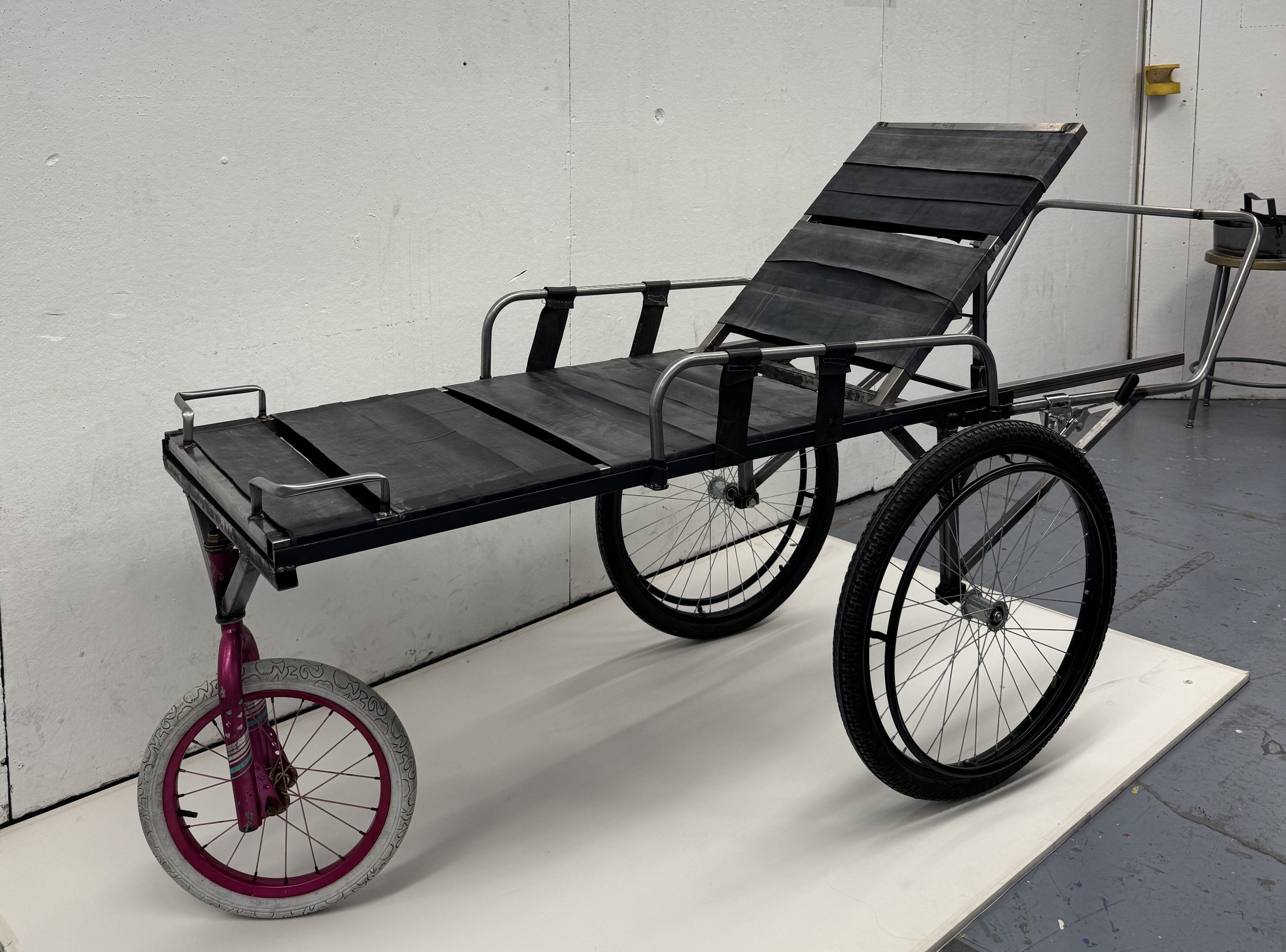
The REACH Stretcher aims to bridge the existing emergency healthcare gap by providing a mobile, highly portable stretcher that can be stored at central hubs within the township. This will allow patients to be transported safely and efficiently through dense, uneven areas to either an ambulance waiting on an access road or to a clinic.

We’ve developed a stretcher that is both rugged and easy to maintain, designed with locally sourced materials and bicycle parts, allowing it to be repaired and adapted using tools and skills already present in the community. 

Next steps for the REACH Stretcher include:

  • Manufacturing and Assembly: Building the stretcher in Cape Town using local resources and manufacturers.
  • Field Testing: Working with Community Health Workers and residents to evaluate the stretcher in everyday use.
  • Co-Designing the System: Creating a plan for training, deployment, and integration into Langa’s emergency response network.
  • Exploring Expansion: Traveling to Johannesburg, to connect with healthcare partners for future implementation.

Looking Ahead

Our time in Langa reinforced the importance of designing with communities, not for them. Our project is as much about systems and relationships as it is about hardware. By working with Shonaquip and the local bike hub, we aim to not only build a product, but help lay the groundwork for a sustainable emergency care infrastructure that can scale to other townships.


Returning to Langa: June 2025

After a semester of prototyping and iterating, including the construction of four full-scale stretchers, we were ready to enter the next phase of the project in Langa. With our bags packed full of tools and safety glasses, and our final prototype cut down and zip-tied into our checked luggage, we made our return to South Africa in June 2025. 

Alongside our MIT student team, we arrived with three main goals: 

  • Assist in the preparation of proper protocol for the Community Health Workers to implement the stretcher and outline documentation to record usage;
  • Reconstruct our prototype from the U.S. in Langa to use for presentations and demonstrations, while also coordinating the final fabrication of our design by a local steel manufacturer;
  • And work in collaboration with the community in Langa to spread awareness and understanding of the project.

In the few weeks we were able to spend in Langa, we were able to establish a collaborative relationship with the Langa Safety Patrol, present to the staff of Vanguard Community Health Centre, perform an instructional demonstration to the Community Health Workers in the township, identify and partner with local businesses as contact points during emergencies for those without phone access, distribute hundreds of informative flyers in both English and Xhosa (the primary language spoken in the Western Cape), and even hold a parade through the streets for our professionally manufactured stretcher. 

The parade acted as a celebration of the start of the next stage of the project: a collaborative testing phase that will give us vital feedback. This is another step towards getting the REACH stretcher into other communities and more rural spaces. We look forward to sharing more about our project updates and trip in the near future.

More stories

Fusing Service and Creative Work: MassArt Alumna Shares Her Thoughts as an Older Student

Brett Poza returned to MassArt to pursue an MFA at 60—bringing with her decades of experience as an art therapist and a lifelong commitment to storytelling.

View story
A large, twisted tree with a wide, curving trunk stands in a forest clearing, its earthy texture and painted look reflecting the creative work of a MassArt alumna surrounded by slender trees with sparse leaves.

Through the MassArt Looking Glass: Nancy Callan Takes Students Down Memory Lane

MassArt alum Nancy Callan returns with Blown Away judge Katherine Gray, showcasing collaborative glassblowing and inspiring students through hands-on demonstration and mentorship.

View story
A group of about 30 smiling people pose together in an industrial MassArt workshop, surrounded by metal equipment and work tables. Some are standing, some kneeling, and many flash peace signs—a perfect stroll down memory lane.

Designing Her Future: How Scholarship Support Fuels Rachel Buckley’s Entrepreneurial Dreams

MassArt Industrial Design student Rachel Buckley shares how scholarship support empowers her as a nontraditional student.

MassArt Industrial Design student Rachel Buckley shares her dreams of becoming an entrepreneur and how scholarship support empowers her as a nontraditional student.

As a nontraditional student, scholarship support ensures that Rachel can continue building the skills and confidence to create innovative designs and realize her entrepreneurial ambitions.

As giving season approaches, please consider making a gift of any amount to support unique and innovative changemakers like Rachel, so they can complete their education and make their mark on the world.

Having any kind of scholarship support means the world to me because I really want to be here… I’m on the right path and I’m doing what I was meant to do.  Rachel Buckley BFA ’25

More stories

MassArt Students and Alumni Combine Forces to Tune Into the Science of Sound

MassArt and TERC bring creative installations together with research on soundscapes and learning.

View story
Five MassArt students and alumni stand side by side in front of a gallery wall displaying pencil sketches and a sign titled “sonicxhibit.” The group appears relaxed, posing for a photo in the well-lit Science of Sound exhibition space.

Support Food Security and Student Success at MassArt

Emily Blair, Sculpture and History of Art ‘26, found her creative home at MassArt, where the facilities are unlike anywhere else.

View story
A smiling person with short dark hair, wearing a black tank top, necklaces, and a wide belt, stands in a well-lit MassArt studio. Art supplies and tools are visible around the room. MASSART GIVING TUESDAY and student success are highlighted in the top right corner.

Ceramicist & Alum Sam Kim Creates One-of-a-Kind Awards for MassArt’s 2024 Common Good Award Honorees

MassArt Common Good Award Honorees receive custom, inscribed ceramic awards by Sam Kim, a MassArt alum transforming slipcasting into unique artistry.

Share related links

At the MassArt Common Good Awards, community members gather to celebrate individuals fostering positive change through creativity, leadership, and service.

Reflecting the event’s emphasis on individuality and artistic expression, honorees each year receive a custom-made award created by an artist or designer from the MassArt community. In 2024, honorees received custom ceramic pieces by Sam Kim, a 2018 graduate of MassArt’s Industrial Design and Ceramics programs.

Kim discovered his passion for ceramics while studying Industrial Design at MassArt, where he was drawn to clay’s malleable and moldable nature. His work seamlessly blends the precision of industrial design with the expressive possibilities of clay, resulting in pieces that are both functional and visually dynamic.

Slipcasting, a process involving liquid clay poured into molds, serves as the foundation of Kim’s practice. He challenges its conventional use by carefully layering and stacking molds to ensure each piece is unique. His aesthetic is defined by what he terms “offsets”—intentional slants and geometric contours that combine curves with sharp cuts. These features add movement and tension to his work, transforming a traditionally uniform process into a method for creating truly personal and distinctive objects.

In addition to his artistic practice, Kim co-founded Slow Hands Studio in Lowell with his studio partner, Leena Cho. Together, they have built a creative space dedicated to producing thoughtfully designed ceramics and exploring new possibilities in the medium. Outside the studio, Kim draws inspiration from his everyday rituals, whether brewing the perfect cup of coffee, cycling through the city, exploring new technologies, or playing video games.

Kim’s work has been featured in exhibitions such as Lines of Korea, Cultural Context, and the State of Clay Biennial. His custom-designed pieces for the MassArt Common Good Awards reflect his dedication to craftsmanship and his vision for pushing the boundaries of ceramic design.

More stories

Fusing Service and Creative Work: MassArt Alumna Shares Her Thoughts as an Older Student

Brett Poza returned to MassArt to pursue an MFA at 60—bringing with her decades of experience as an art therapist and a lifelong commitment to storytelling.

View story
A large, twisted tree with a wide, curving trunk stands in a forest clearing, its earthy texture and painted look reflecting the creative work of a MassArt alumna surrounded by slender trees with sparse leaves.

Through the MassArt Looking Glass: Nancy Callan Takes Students Down Memory Lane

MassArt alum Nancy Callan returns with Blown Away judge Katherine Gray, showcasing collaborative glassblowing and inspiring students through hands-on demonstration and mentorship.

View story
A group of about 30 smiling people pose together in an industrial MassArt workshop, surrounded by metal equipment and work tables. Some are standing, some kneeling, and many flash peace signs—a perfect stroll down memory lane.

Industrial Design

Studios

Industrial Design students have access to our Auxiliary Fabrication Studio, Model Shop, and a studio space within a collaborative work environment.

The Industrial Design studios, located on the tenth floor of the Tower building, are well-equipped with resources that mimic a professional workspace, giving our students a hands-on learning experience. Here are some of the primary resources you will use:

  • Dedicated Studio Space: Each student gets their own studio space, a place to work independently that also encourages collaboration and teamwork.
  • Classroom-Studio Integration: Many classes are taught right in the studio, providing a real-world work environment experience.
  • Computer Lab: Our computer lab is equipped with industry-standard computers and the latest design software. These computers are connected to Cintiq computer drawing screens, allowing students to work digitally, a critical skill in modern design.
  • 3D Printers: We have six 3D printers for rapid prototyping, allowing students to bring their digital designs to life and experiment with different ideas.
  • Model Shop: This is where students can build physical prototypes of their designs, learning to work with various materials.
  • Soft Goods Development Area: This space is dedicated to projects involving fabrics and soft materials, providing students with a wide range of design possibilities.
  • All-School Workshop and Fabrication Labs: These facilities offer advanced manufacturing technologies like laser printing, water jet printing, CNC milling, and plasma cutting. Students can experiment with different materials and techniques, which is essential for their growth as versatile designers.

With these resources, you will be well-prepared for success in the professional world, with practical skills and hands-on experience with cutting-edge tools and technologies used in the industry.

Check out What Our Students are Making

Industrial Design

Featured Work

MassArt logo
621 Huntington Ave,
Boston, MA 02115

(617) 879-7000